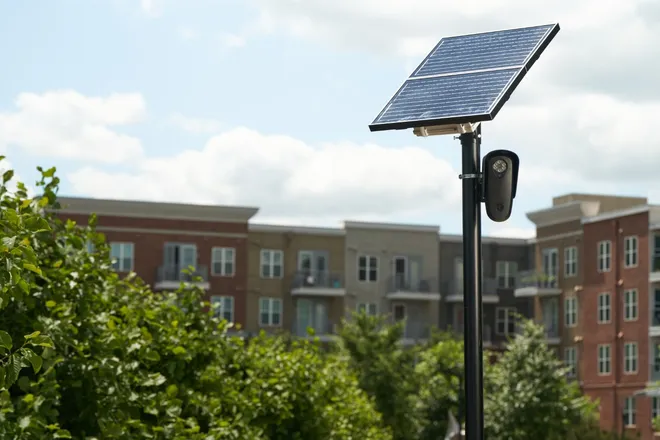
See What's Watching Indiana
Tracking the growing use of Automated License Plate Readers (ALPRs) and bringing greater awareness to mass surveillance across Indiana.
3,140+
Flock Cameras Documented in Indiana
3
Communities Rejecting or Ending Flock
What Are Automated License Plate Readers (ALPRs)?
These are camera systems that automatically capture and analyze passing vehicles, creating a digital record of where and when a vehicle was observed.
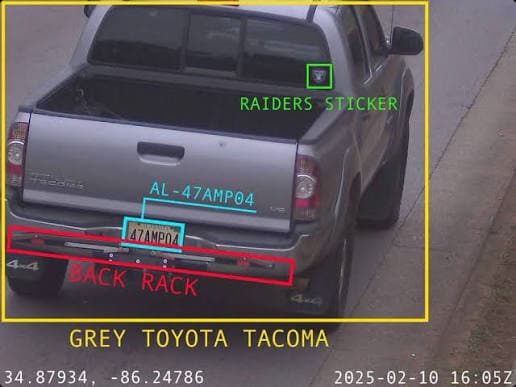
Unlike a traditional security camera that simply records video, ALPRs use software to extract information from each vehicle they detect. This can include the license plate, date, time, and location of the detection, as well as characteristics such as the vehicle's make, model, color, bumper stickers, roof racks, and visible damage.
That information can then be stored as a searchable record. Instead of reviewing hours of camera footage, authorized users can search vehicle detections to determine where and when a particular vehicle was observed.
The Risks of Mass License Plate Surveillance
One of the most significant concerns surrounding these systems is their ability to record the movements of ordinary people who are not suspected of committing a crime. As vehicles pass ALPR cameras, their locations can be recorded without a warrant, probable cause, or individualized suspicion.
The concern extends beyond the collection of this data. ALPR systems create databases of vehicle sightings that can be searched by authorized users, raising important questions about who has access, how that access is monitored, and what happens when the technology is used outside of its intended purpose.
Flock Safety is the dominant manufacturer behind this expansion. Its cameras make up the majority of documented ALPRs in the United States, giving the company an outsized role in how this surveillance infrastructure is deployed, connected, and accessed across communities.
Persistent Location Tracking
In 2026, an Indianapolis police officer was accused of using Flock searches to monitor vehicles associated with his wife and acquaintances. The officer allegedly conducted as many as 3,759 searches over a ten-month period. IMPD suspended the officer and opened an investigation into the activity.
Read the Indiana Capital Chronicle report →Searchable Historical Records
A former Jackson County, Indiana deputy was charged after investigators alleged that he used Flock more than 2,000 times to search for his girlfriend's license plate. Authorities said some searches were falsely labeled as "city planning/traffic analysis," showing how stored vehicle sightings can be repeatedly queried for personal purposes.
Read about the Indiana case →Expanding Access
In 2025, a Texas sheriff's office searched Flock's nationwide network for a woman who had reportedly self-administered an abortion. Audit records described the search as "had abortion, search for female," and the query reached cameras far beyond the department's own jurisdiction.
Read the WOSU investigation →
Explore DeFlock
DeFlock is an open-source project dedicated to documenting ALPRs across the United States. Its tools can help you see where ALPR cameras have been reported, better understand how the technology works, and learn more about the growing surveillance network being built across communities.
Explore the Camera Map
View community-reported ALPR locations across the country and see where license plate readers have been documented near your community.
Open the DeFlock Map →Spot Cameras
Found an ALPR camera in your community? Learn how to identify these systems and report their locations to help keep DeFlock's community-built map up to date.
Report a Camera →Get Involved
Connect with others working to bring greater transparency to ALPR surveillance. Find local DeFlock groups, meet people in your area, and get involved in your community.
Find a Local Group →